
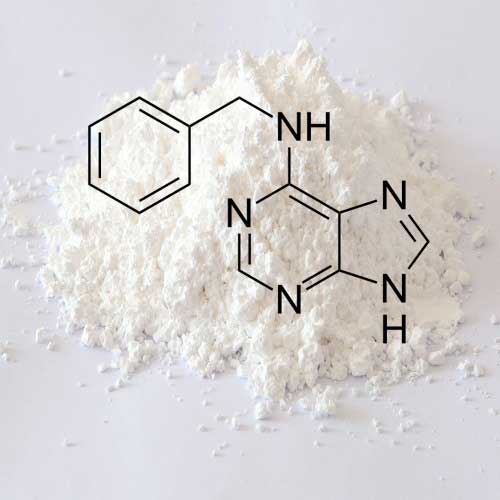
Plant tissue culture has revolutionized plant biotechnology, allowing for the propagation, conservation, and manipulation of plants under controlled conditions. One of the key components of plant tissue culture is the use of plant growth regulators, such as cytokinins, to promote plant cell division, differentiation, and growth. One of the most commonly used cytokinins in tissue culture is 6-Benzylaminopurine (BAP), a synthetic cytokinin that has been extensively studied and widely used in tissue culture applications.
BAP has been shown to induce a range of morphogenic responses in plant tissue culture, including shoot regeneration, callus formation, somatic embryogenesis, and root regeneration. However, the optimal concentration and duration of BAP treatment varies depending on the plant species, tissue type, and the specific application.
Shoot regeneration is one of the most commonly studied applications of BAP in tissue culture. To induce shoot regeneration in some plant species, BAP is typically used at concentrations ranging from 0.5 to 10 mg/L, depending on the plant species and explant type. Higher concentrations of BAP can lead to the formation of hyperhydric shoots, which are often malformed and less vigorous than normal shoots. In contrast, lower concentrations of BAP may result in the formation of fewer shoots or no shoots at all. A combination of BAP and another plant growth regulator, such as auxin, may be used to achieve optimal shoot regeneration in some plant species.
Apart from shoot regeneration, BAP is also used in tissue culture to induce callus formation and somatic embryogenesis. For these applications, higher concentrations of BAP (up to 20 mg/L) may be used. In contrast, lower concentrations of BAP (around 0.1 to 1 mg/L) may be used to promote root regeneration in some plant species.
While BAP is a powerful tool in plant tissue culture, overuse of BAP can lead to undesirable effects such as hyperhydricity and low rooting capacity. Therefore, proper dosing and timing of BAP treatment are critical to the success of tissue culture experiments. The optimal concentration and duration of BAP treatment should be determined experimentally for each plant species and explant type, highlighting the importance of careful optimization of tissue culture protocols to achieve optimal results.
In summary, BAP is a versatile plant growth regulator that has numerous applications in plant tissue culture. Its ability to promote shoot regeneration, callus formation, somatic embryogenesis, and root regeneration make it an essential tool for plant biotechnology. However, its use must be carefully optimized to achieve optimal results, and its effects should be monitored to prevent undesirable effects. Proper dosing and timing of BAP treatment are critical to the success of tissue culture experiments.
* All prices EXCL. VAT, Shipping & packaging


Reviews
There are no reviews yet.