
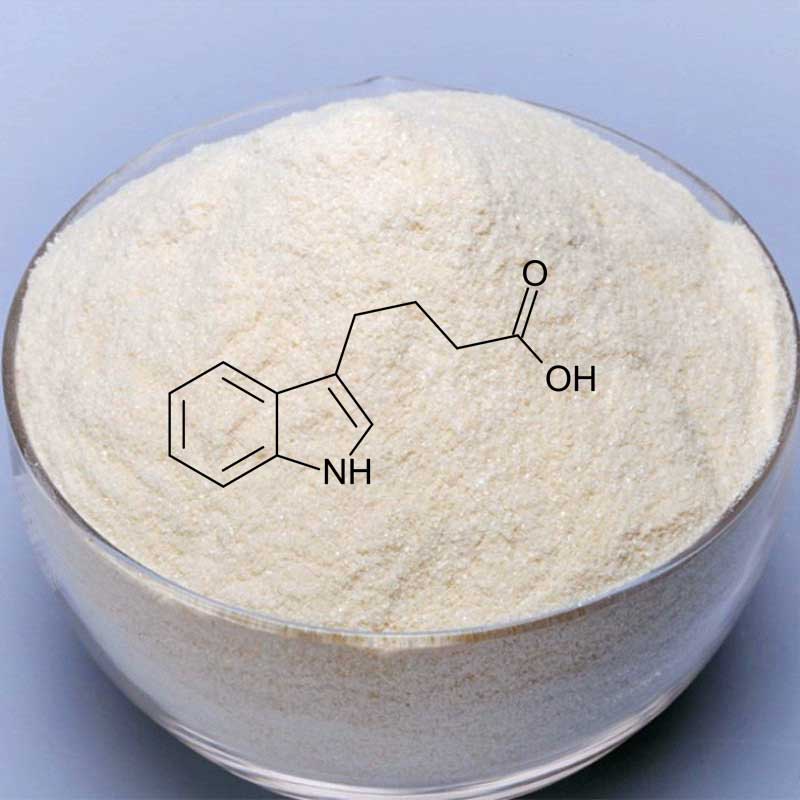
Indole-3-butyric acid (IBA) is a plant hormone that is commonly used in plant propagation and tissue culture. It is a synthetic form of the natural auxin hormone, which plays a crucial role in plant growth and development, including cell division, root formation, and apical dominance.
In plant propagation, IBA is often used to promote root development in stem cuttings. When applied to the base of a cutting, IBA stimulates the formation of new roots and helps the cutting to establish itself as a new plant. IBA is typically applied as a powder or a liquid solution, and the concentration and application method can vary depending on the plant species and the desired outcome.
In tissue culture, IBA is commonly used to induce somatic embryogenesis, which is the process of generating embryos from somatic cells. This technique is often used for mass propagation of plants and for the production of genetically identical plants. In tissue culture, IBA is typically added to the culture medium at a concentration of 0.1-10 mg/L, depending on the plant species and the desired outcome.
However, it’s important to note that IBA can be toxic at high concentrations and can cause adverse effects on plant growth and development. Therefore, it’s crucial to carefully dose IBA and to optimize the concentration for each individual plant species and culture condition.
Overall, IBA is an essential tool in plant propagation and tissue culture, and it plays a crucial role in promoting plant growth and development.
* All prices EXCL. VAT, Shipping & packaging

Reviews
There are no reviews yet.